
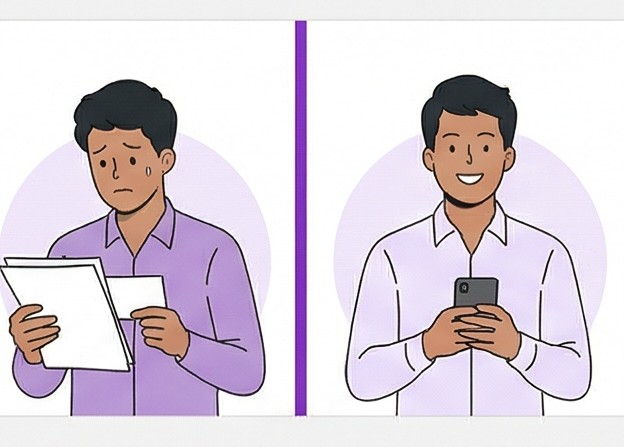

A personal loan rejection from your bank — or any bank — stings. You feel like you've been told you're financially untrustworthy. But the reality is more boring and more fixable: banks have rigid automated scorecards, and if your profile doesn't tick every box, the system says no without nuance. NBFCs operate differently, and understanding this gap can get you the loan you need.
Why Banks Reject Personal Loans (Honest Reasons)
Banks have three common reject triggers that NBFCs handle more flexibly:
- Salary threshold: your bank typically requires ₹40,000–₹50,000 minimum net salary for personal loans. NBFCs start at ₹20,000–₹25,000.
- CIBIL score cutoff: Banks usually need 720–750+. NBFCs approve from 650.
- Employer category: Banks prefer large listed companies, PSUs, and government entities. NBFCs accept private SME employees too.
- New to job: Banks want 1–2 years at current employer. NBFCs work with 6 months.
- Existing obligations: High FOIR (multiple running EMIs) kills bank applications instantly. NBFCs assess this case by case.
The Difference Between NBFC and Bank Personal Loans
NBFCs are regulated by RBI just like banks, but they operate under different rules that give them more lending flexibility:
- NBFCs can't accept savings deposits — so they're more motivated to lend efficiently
- Their risk models are often more granular — they use alternative data (bank statement patterns, UPI history) not just CIBIL
- Loan processing is typically faster: 24–72 hours vs 7–14 days for banks
- Interest rates are typically higher (12–26%) than best bank rates (10.5–14%) but lower than credit cards
Top NBFCs Approving Personal Loans in 2025
These are active, RBI-regulated NBFCs with transparent lending practices:
- Bajaj Finance: India's largest consumer lender; broad eligibility criteria.
- Tata Capital: Strong for salaried professionals; good rates for 700+ CIBIL.
- IIFL Finance: Approves 650+ CIBIL; fast digital process.
- Poonawalla Fincorp: Among lowest NBFC interest rates; transparent fees.
- Fullerton India: Good for Tier 2/3 cities; flexible documentation.
- L&T Finance: Fast approval; works with varied income profiles.
Is It Safe to Borrow From an NBFC?
Yes — with one important check. Verify that the NBFC is registered with the RBI (every legitimate NBFC has a Certificate of Registration you can verify on RBI's website). Registered NBFCs follow fair practices guidelines, can't charge hidden fees without disclosure, and must follow RBI grievance resolution processes. The ones listed above are all RBI-registered and have operated for 10+ years.
What to Do After a Bank Rejection
- Don't apply to 5 different lenders immediately — each hard inquiry drops your CIBIL
- Check your rejection reason (banks must tell you on request)
- Use a loan marketplace for a soft eligibility check across multiple NBFCs
- Wait 30–60 days before the next hard inquiry if you were rejected due to CIBIL
Want to check your eligibility right now?
GetExpressLoans connects you with 15+ trusted NBFCs — no branch visits, no paperwork hassle.
👉 Check your eligibility on WhatsApp — it takes under 2 minutes and won't affect your CIBIL score.