
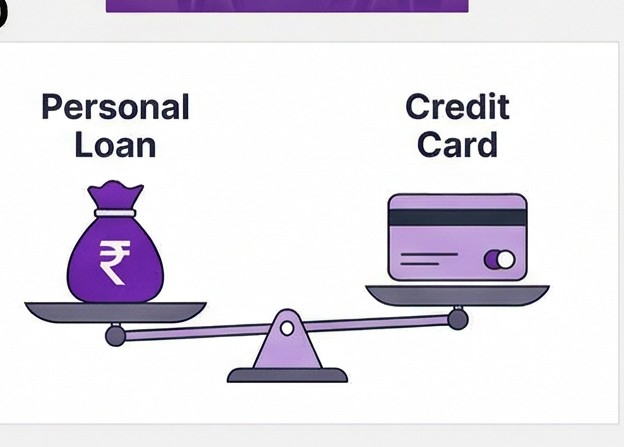

Comparing financial products in India can feel like reading a menu in a language you half-understand. This guide cuts through the noise and gives you the straight comparison you need to make a smart borrowing decision — based on what actually matters for your pocket.
The Core Difference to Understand
Personal loans are unsecured, fixed-rate, fixed-tenure debt. That means no asset at risk, predictable monthly payments, and a defined end date. This is their biggest advantage over revolving debt like credit cards, and their biggest disadvantage compared to secured loans like gold loans (where the asset backs a lower rate).
Cost Comparison: Real Numbers
Let's take ₹1 lakh for 12 months across different options:
- Personal loan (NBFC, 16%): EMI ₹9,073 | Total interest ₹8,876
- Credit card rollover (36%): Minimum payment trap — interest alone exceeds ₹3,000/month
- Gold loan (10%): EMI ₹8,792 | Total interest ₹5,502 — but requires gold as collateral
- Salary advance app (flat 2%/month = 24% effective): EMI ₹9,463 | Total interest ₹13,556 — most expensive after credit cards
When a Personal Loan Is the Right Choice
Choose a personal loan when:
- You don't have assets to pledge (no gold, no property)
- The amount is too large for a credit card to handle responsibly
- You need more than 45 days to repay
- You want a structured repayment plan with a definite end date
- You want to consolidate multiple high-interest debts into one lower EMI
Common Myths That Cost People Money
- Myth: "Getting a personal loan means I'm bad with money." Reality: Structured debt at 14–20% is smarter than borrowing from credit cards at 36% or informal lenders at 40%+.
- Myth: "Lower EMI is always better." Reality: A lower EMI means longer tenure, which means more total interest paid. Match tenure to your actual repayment capacity.
- Myth: "Processing fee is the only extra cost." Reality: Check for prepayment penalties (1–4%), late payment fees, and insurance premiums bundled without your clear consent.
- Myth: "Pre-approved means approved." Reality: Pre-approved offers are still subject to full underwriting. Your profile may change the final offer.
How to Get the Best Rate Available to You
Your interest rate depends on CIBIL score, salary level, employer category, existing obligations, and loan tenure. To get the best rate: check your CIBIL first (free at CIBIL's website), use a marketplace to compare offers (soft inquiry only), and negotiate — especially if you have a 720+ score and stable employment. Many NBFCs have rate bands and can flex 1–2% for strong profiles.
Want to check your eligibility right now?
GetExpressLoans connects you with 15+ trusted NBFCs — no branch visits, no paperwork hassle.
👉 Check your eligibility on WhatsApp — it takes under 2 minutes and won't affect your CIBIL score.